Share of Voice in AI Answers: Benchmarking Your Brand Against Competitors
3 minutes read
Share of Voice in AI Answers: Benchmarking Your Brand Against Competitors
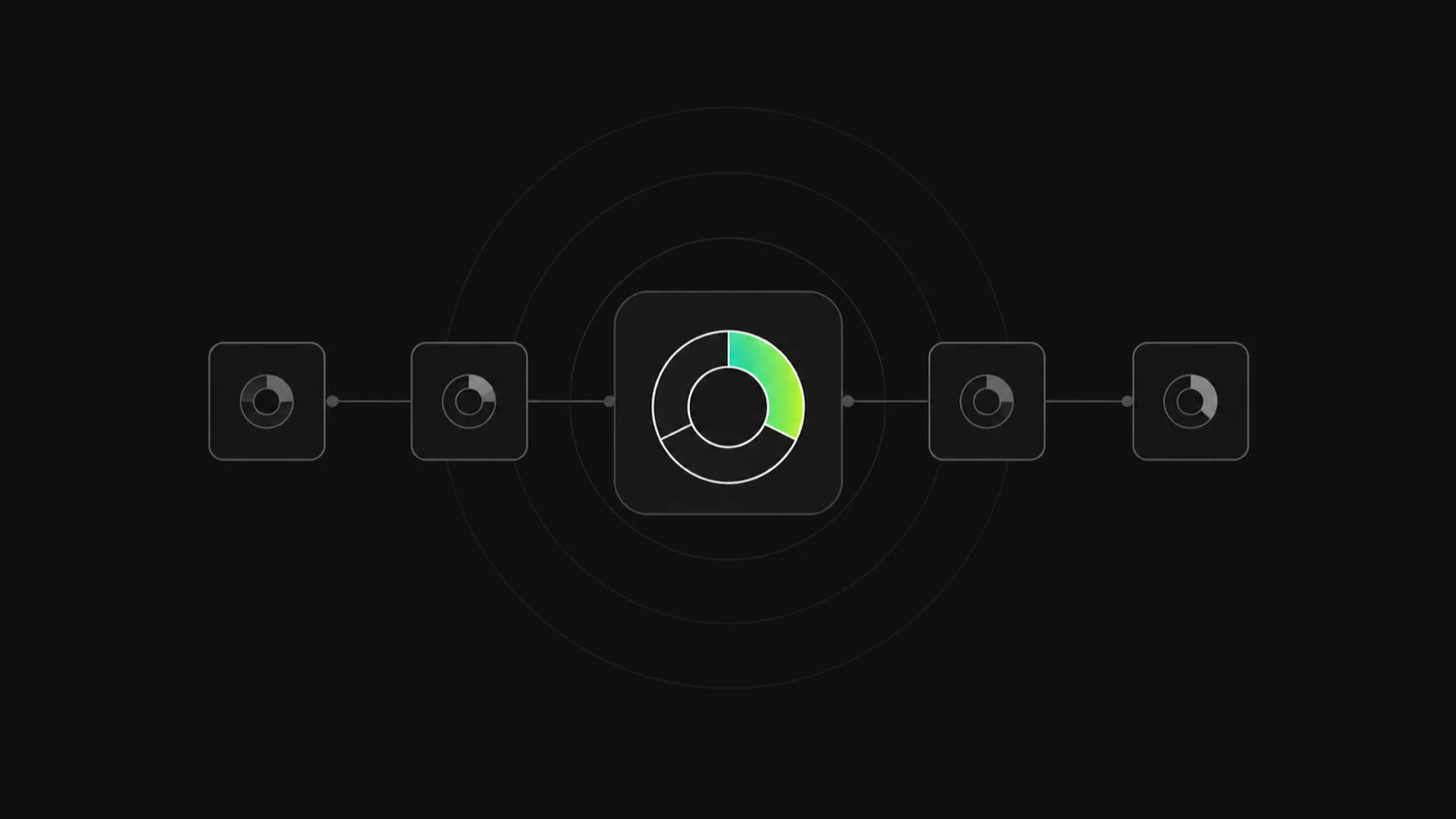
When a buyer asks ChatGPT or Perplexity to name the best tools in your category, a handful of brands get mentioned. AI share of voice is the percentage of those answers that name you versus the competitors named alongside you. It is the single number that tells you whether the machine that now sits between your buyer and your website actually recommends you, or quietly recommends someone else.
Old-world share of voice measured your slice of ad spend or search impressions. That framing is breaking. Buyers increasingly ask an AI assistant before they run a search, so the answer is the new shelf, and most brands cannot see their position on it.
What AI share of voice actually measures
Visibility rate tells you how often an engine names you at all. AI share of voice goes one step further and asks: of every answer where somebody in your category gets named, what fraction is you?
Think of it as a competitive scoreboard built from real AI answers, not from ad auctions. Two brands can both have a decent visibility rate and still sit far apart on share of voice, because one keeps showing up next to three rivals and the other keeps showing up next to none.
A vanity version of this metric says "we appear in AI answers." The concrete deliverable is different: your share of every AI answer, benchmarked against each named competitor, tracked over time. That is what you can take into a planning meeting. For the full method, see how to conduct competitive benchmarking for generative AI.
Who counts as a competitor
You do not have to hand-build the competitor set. Gensiv auto-suggests competitors from your domain, so the benchmark starts from the brands AI is genuinely placing beside you rather than the ones you assume are your rivals. You can then keep, drop, or add names.
That distinction matters. The competitors marketing teams worry about in the boardroom are often not the ones AI actually surfaces for a buyer's prompt. Share of voice measured against the real answer set is decision-grade. A list you guessed at is not.
Tracking it over time, not once
A single manual spot-check is close to useless here. Ask the same question twice and AI models often phrase the answer differently, name a different mix, or reorder the list. Signal gets lost in that variance.
Gensiv runs scheduled measurement (daily on every plan) and reports a stable share of voice across that answer variance, so a move on the chart is a real move and not noise. You watch the trendline, not a lucky screenshot.
| Metric | Vanity read | Decision-grade read |
|---|---|---|
| Visibility | "We showed up once" | Visibility rate over time |
| Position | "We were mentioned" | Rank and sentiment per engine |
| Competition | "We beat them, probably" | Share of voice vs named competitors, tracked |
Why neutral measurement is the whole game
Here is the trap. If you check your own brand while logged in to your own AI accounts, personalization and account memory flatter you. The engine already knows you. Your buyer's fresh, anonymous session does not.
Gensiv measures logged-out, in stateless sessions with no personalization, across six engines (ChatGPT, Google AI Overviews, Google AI Mode, Gemini, Perplexity and Claude) and 190+ markets. That is why the share of voice number is decision-grade rather than a flattering approximation. We hold ourselves to the same standard and publish our own dogfood numbers.
The takeaway
Share of voice benchmarked from actual AI answers turns a fuzzy worry ("are we losing to competitors in AI?") into a tracked number you can move. Start with the real competitor set, measure it neutrally, and watch the trendline instead of a screenshot.
See where you stand today. Every Gensiv plan shows whether AI recommends your brand and benchmarks your share of voice against named competitors. Get started at gensiv.com/signup, or book a demo on the site.
More blog posts to read
Generative AI Brand Monitoring: How to Track What AI Says About You
Generative AI brand monitoring tracks how ChatGPT, Gemini, Perplexity and Google AI describe your brand. What to monitor, how to set up tracking, and how alerts work.
October 6, 2026
Prompt Tracking vs Keyword Tracking: How Reliable Is Prompt Data?
Prompt tracking vs keyword tracking: how prompt tracking tools work, where their data is solid, where it is not, and how to read it alongside SEO rank data.
October 6, 2026