Brand Mentions vs Citations in AI Answers: What's the Difference?
10 minutes read
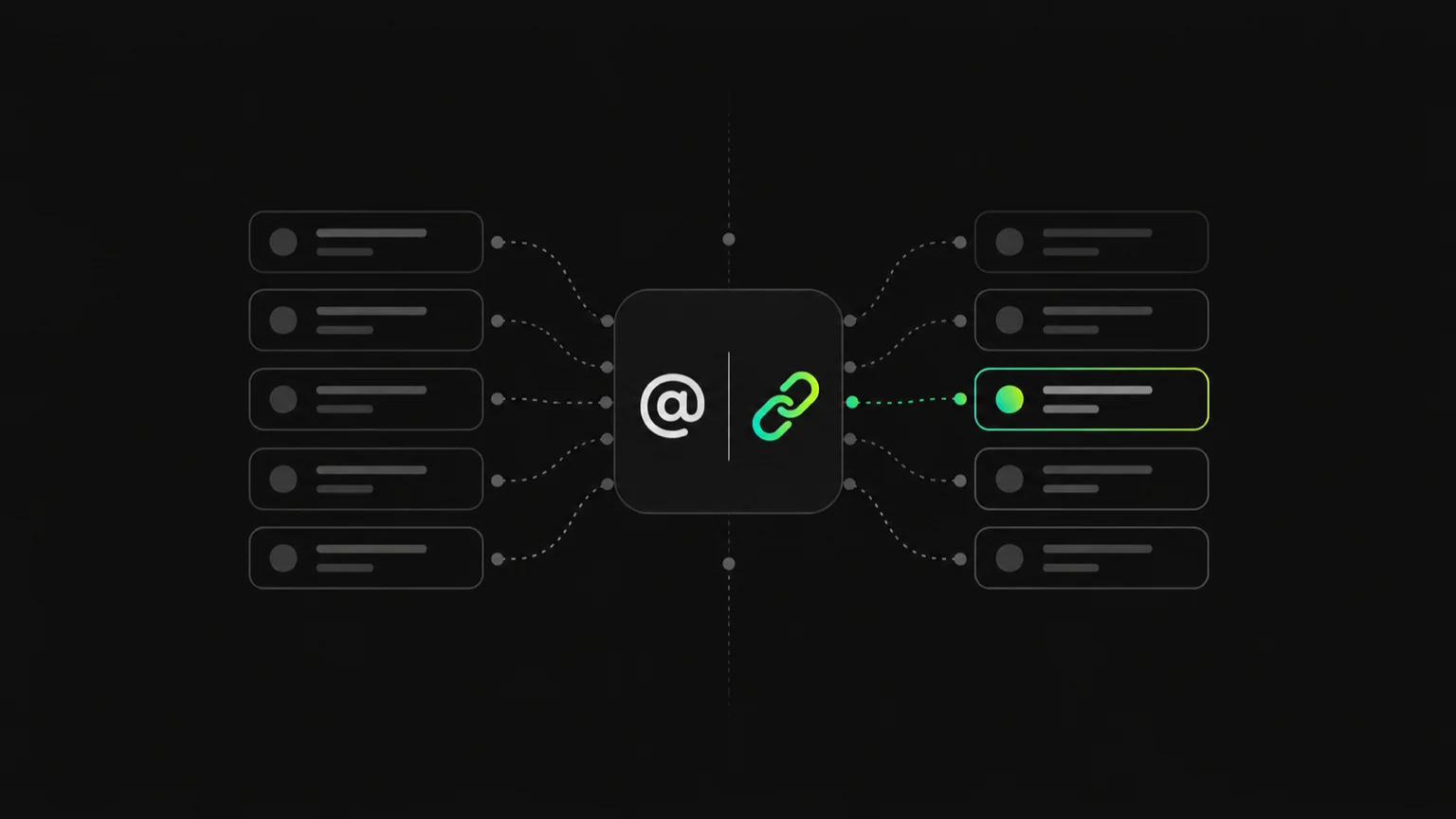
Ask ChatGPT or Perplexity for the best tools in your category and two different things can happen to your brand. The answer can name you in its text, or list a page from your website as a source. Often only one happens. Lumping them together as "showing up in AI" hides the problem you actually need to fix.
A brand mention is an AI engine naming your brand in the text of its answer. It tells you the model knows you exist and considers you relevant to the question.
A brand citation is an AI engine referencing a page on your domain as a source behind its answer, usually shown as a link, footnote or source card. It tells you the engine retrieved your content and treated it as evidence.
The short version: mentions measure whether AI recommends you, citations measure whether AI trusts your pages. They move for different reasons, so you track them separately and improve them with different work.
What is the difference between brand mentions and citations?
A mention lives in the answer. A citation lives in the sources. That sounds like a small distinction, but it changes what each one tells you and what you can do about it.
| Brand mention | Brand citation | |
|---|---|---|
| What it is | Your brand name appears in the answer text | A URL on your domain is listed as a source |
| Where you see it | In the sentences the buyer reads | In links, footnotes or source cards beside the answer |
| What it signals | The model sees you as a relevant option | The engine retrieved your page and used it as evidence |
| What drives it | How the web as a whole describes your category and brand | Whether your pages are crawlable, retrievable and directly answer the question |
| Who it influences | The buyer's shortlist | Trust in the answer, and sometimes a click to your site |
| Can you have one without the other? | Yes | Yes |
| Core metric | Mention rate | Citation rate |
The glossary puts it plainly: a mention is an occurrence of your brand name in the answer, while a citation is a reference to a source behind it. Neither is a subset of the other.
Can a brand be mentioned without being cited?
Yes, and it is common. Take Cadence, a fictional CRM for small sales teams.
A buyer asks: "What is the best CRM for a five-person sales team?" The answer lists four options and names Cadence third, with a line about its simple pipeline view. That is a mention. But the sources beside the answer are a review site's category page, a ranked list on a software blog and a Reddit thread comparing CRMs. None of them is on cadence.com.
This happens for two main reasons:
- The model named Cadence from what it already knows. Engines often answer partly from memory, without linking a source for every brand they name.
- Third-party pages carried the answer. The engine retrieved pages that talk about Cadence, but those pages belong to someone else. The review site gets the citation. Cadence gets the mention.
That is not bad news: Cadence is on the shortlist. But its story is being told entirely by other people's pages.
Can a brand be cited without being mentioned?
Also yes, and it is the more surprising case.
A different buyer asks: "How should a small sales team structure its pipeline stages?" Cadence has a clear, well-structured guide on exactly that topic. The engine retrieves it and lists it as a source. But the answer itself gives generic advice and recommends no products, or names two competitors as tools to try. Cadence's page did the teaching. Cadence's name never appears.
This is a citation without a mention. It usually means your content is useful and retrievable, but the answer is not connecting that content to your brand as a recommendation. It also shows that a citation is not an endorsement. The engine used your page as evidence, not as a vote for your product.
Which matters more: mentions or citations?
It depends on the goal. Both matter, but for different jobs.
| Your goal | Watch this first | Why |
|---|---|---|
| Get on the buyer's shortlist | Mentions, and where you rank in the answer | Buyers act on the brands named in the text |
| Control how AI describes you | Citations of your own pages | When your page is the source, your facts shape the answer |
| Earn referral traffic from AI | Citations | Only a cited link can send a click |
| Beat a specific competitor | Both, benchmarked side by side | You need to know whether you trail on recognition, on sources, or both |
| Fix inaccurate AI answers | Citations and the third-party sources cited | Wrong facts usually trace back to a source you can find |
If you can only watch one number, watch mentions on buying-intent prompts: a buyer who never sees your name will not shortlist you. But citations are what make mentions accurate and durable.
How do AI engines differ in showing citations?
Citation behaviour varies a lot by engine, so the same brand can look well cited on one and invisible on another.
- Perplexity shows sources on essentially every answer, which makes citation data richest there.
- Google AI Overviews typically display the pages the summary drew on alongside the answer.
- ChatGPT links sources when it searches the web. When it answers from the model's memory, there are often no links at all, even though brands are still named.
- Gemini, Copilot and Claude vary by mode and by question, sometimes linking sources prominently and sometimes answering without them.
So compare citation counts within an engine, not across engines, and do not read a low citation count on an engine that rarely links sources as a failure on its own. Our breakdown of AI visibility by engine covers the per-engine differences in more depth.
How do you measure brand mentions and citations?
You measure both as rates over a fixed set of buyer questions, run repeatedly, rather than as screenshots of a single answer. AI answers vary from run to run, so one check is an anecdote.
Mention rate is the share of tracked answers that name your brand. If Cadence is named in 30 of 100 answers, its mention rate is 30%. This is what most tools call visibility rate.
Citation rate is the share of tracked answers that cite a URL on your domain. If cadence.com appears as a source in 12 of those 100 answers, its citation rate is 12%.
A reliable setup looks like this:
- Pick the prompts buyers actually ask. Category, comparison and alternatives questions, not just your brand name.
- Run them on a schedule across engines. Daily runs smooth out answer variance.
- Count mentions and citations separately. Tracking a single combined number hides which one moved.
- Record position. When an answer lists options, being named first is very different from being named sixth.
- Exclude failed runs. If an engine was unreachable, that run should not count as a zero, or outages will look like drops.
- Keep the sources that were cited instead. The domains and URLs cited when you are not are your to-do list.
How to benchmark your brand's AI citations vs competitors
A mention rate or citation rate means little in isolation. Is 12% good? It depends on what your competitors get on the same questions.
Competitive benchmarking means running the exact same prompts, on the same engines, on the same schedule, and counting mentions and citations for every tracked brand. Then compare:
- Mention rate vs competitors tells you who owns the shortlist. This is the basis of share of voice in AI answers.
- Citation rate vs competitors tells you whose pages the engines trust as evidence.
- The gap between the two, per brand, shows the shape of each position. A competitor with a high mention rate and a low citation rate is winning on reputation, not content. One with high citations is winning on pages you can study.
- The URLs cited for competitors but not for you are your missing links: specific pages to get onto, beat or replace.
How do you improve brand mentions?
Mentions follow from how the web as a whole describes your category, so most of the work happens off your own site.
- Get onto the pages engines already cite. Review sites, ranked lists, comparison articles and community threads that shape your category's answers. If Cadence is missing from the list an engine keeps citing, it will keep being left out of the answer.
- Be consistent about what you are. Describe your category, audience and main use case the same way on your site, profiles and listings, so the model has a clear picture to repeat.
- Show up in genuine community discussion. Helpful, disclosed participation in threads where buyers compare tools. Never spam.
How do you improve brand citations?
Citations follow from whether your pages are retrievable and directly useful for the question, so this work mostly happens on your own site.
- Answer buying questions directly. Pages that state the answer early, in plain language, are easier for engines to quote. Comparison pages, pricing pages and clear how-to guides are common candidates.
- Use structure engines can extract. Clear headings phrased like questions, short answer paragraphs, tables for comparisons and a concise FAQ.
- Make sure crawlers can reach you. Check that your robots.txt does not block the search crawlers of the engines you care about, and that key content renders without relying on heavy client-side scripts.
- Keep facts current. Pricing, plans and feature lists that are out of date give engines a reason to cite someone else's version.
For the step-by-step version of the citation side, including how to turn a competitor gap into a ranked target list, see how to get cited by ChatGPT and Perplexity.
FAQ
What are brand citations in AI answers?
Brand citations in AI answers are references to pages on your website that an AI engine lists as sources for its response, usually as links or footnotes. A citation means the engine retrieved your content and used it as evidence. It is separate from a mention, which is your brand name appearing in the answer text.
What is the difference between brand mentions vs citations?
A brand mention is an AI engine naming your brand in its answer. A brand citation is the engine linking to your domain as a source. You can be mentioned without being cited, for example when third-party review pages carry the answer, and cited without being mentioned, when your guide informs a generic answer.
What is generative AI brand monitoring?
Generative AI brand monitoring is tracking how AI engines talk about your brand. It usually covers mention rate, citation rate, position in the answer, sentiment and which sources get cited, measured on a fixed set of buyer questions run repeatedly.
How do I benchmark my brand's AI citations vs competitors?
Run the same buyer prompts on the same engines and schedule for your brand and each competitor, then compare citation rates side by side. Look at which URLs get cited for competitors but never for you. Those pages are the most direct targets for improving your own citation rate.
Why are my AI mentions up but citations flat?
Engines often name brands from memory or from third-party pages without linking your site. Citations rise when the pages an engine retrieves for a question are on your domain, which usually takes content that answers buying questions directly and is easy to crawl and quote.
See both numbers for your brand
Mentions tell you whether AI recommends you. Citations tell you whether AI trusts your pages. Tracking only one leaves you guessing about the other.
Gensiv counts mentions and citations separately, daily, across your tracked prompts and competitors, and records every URL the engines cite instead. Start with a free AI visibility report to see where your brand stands today, or read how mention and citation tracking works.
More blog posts to read
The GEO Metrics That Matter: Visibility Rate, Rank, Sentiment, Share of Voice
The GEO metrics that matter, visibility rate, rank, sentiment, and share of voice, plus how to turn each one into a next action.
July 20, 2026
How We Measure AI Visibility Accurately: Neutral, Logged-Out Querying Explained
Accurate AI visibility measurement needs neutral, logged-out querying. Here is why personalization pollutes results and how Gensiv keeps it decision-grade.
July 10, 2026